Severe weather off Lake Erie routinely impacts properties from Edgewater and Detroit-Shoreway to tree-lined streets in University Circle and Old Brooklyn. Municipal bulk trash pickup strictly limits branch bundles to…
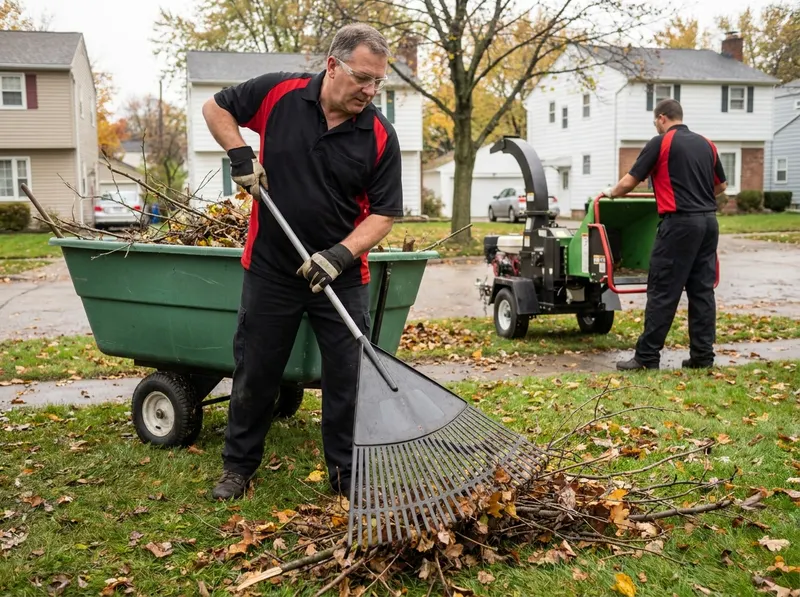
Severe weather off Lake Erie routinely impacts properties from Edgewater and Detroit-Shoreway to tree-lined streets in University Circle and Old Brooklyn. Municipal bulk trash pickup strictly limits branch bundles to specific four-foot lengths and manual weight caps, leaving homeowners with heavy trunk segments, uprooted privet hedges, and dense canopy debris that city crews bypass. Curbside yard waste collection solves this bottleneck by hauling full-scale organic debris directly from driveways, curbs, and side yards without requiring residential property owners to spend hours cutting wood into municipal-compliant bundles.
Selecting dedicated collection fits scenarios where tree limbs exceed 4 inches in diameter or when total brush volume surpasses 5 cubic yards. While hiring an arborist is essential for limbs still suspended in standing trees, ground-level storm cleanup does not require expensive tree-climbing crews. The primary trade-off centers on loading labor: curbside pickup delivers complete haul-off without occupying a driveway for days, whereas a roll-off dumpster provides a multi-day window for DIY clearing projects but requires the homeowner to manually lift heavy oak or maple logs over high container steel walls.
Logistics in older Cuyahoga County street grids demand deliberate equipment placement. Narrow shared driveways common in Tremont, Ohio City, and Slavic Village cannot tolerate heavy commercial axle loads without proper surface defense. Trucks utilize heavy-duty composite runner boards beneath outriggers and tires to prevent asphalt marring or cracking historic brick pavers. In Kamm's Corners and Collinwood, crews verify overhead clearance beneath low-hanging phone drops and mature oaks before positioning loading machinery, ensuring zero disruption to neighboring rights-of-way.
1. Initial assessment involves verifying that piles remain free of downed electrical lines before staging begins. 2. Heavy logs are bucked down to four-to-six-foot manageable sections using chainsaws to balance container weight distribution. 3. Debris is systematically packed onto hauling vehicles using protective driveway ground guards. 4. Operators sweep loose twigs, bark residue, and soil from the loading zone before hauling the material directly to a licensed Cuyahoga County organic processing facility.
Every job gets a firm, written price after a free on-site visit.
Tell us about your yard waste & storm debris collection job in Cleveland and we'll send a clear, written quote, usually the same day.
 BinRush Dumpster Rental