Municipal waste rules across Cleveland mandate that 95-gallon rolling carts arrive at the street curb before 7:00 AM on collection morning. For older residents, injured homeowners, and individuals managing mobility…
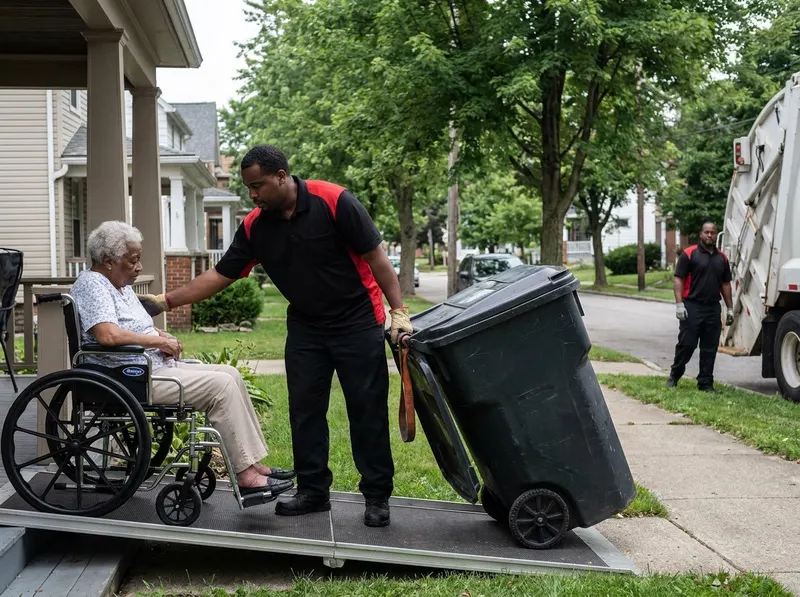
Municipal waste rules across Cleveland mandate that 95-gallon rolling carts arrive at the street curb before 7:00 AM on collection morning. For older residents, injured homeowners, and individuals managing mobility impairments, transporting a 50-to-200-pound container across cracked concrete sidewalks, steep inclines, or ice-covered driveways presents an immediate physical risk. Standard municipal assisted collection through the city requires advance administrative paperwork, physician certifications, and weeks of processing, and it strictly covers routine household trash carts rather than estate cleanouts, renovation offcuts, or sudden overflow. Assisted set-out bridges this gap by sending two-person crews directly onto the property to retrieve standard cans, bagged refuse, or bulky items from ground-level garages, side aprons, or covered back porches.
Neighborhood architecture across Cuyahoga County dictates specific retrieval strategies. In historic districts like Tremont, Ohio City, and Detroit-Shoreway, multi-story wood-frame homes frequently feature narrow shared side driveways, steep wooden rear stairs, and limited street frontage. Crews carry hand trucks, nylon lifting straps, and non-marking rubber tire dollies to maneuver heavy loads down tight passages without damaging historic woodwork or tracking mud across pathways. In post-war bungalows and ranches throughout Old Brooklyn, Kamm's Corners, and Slavic Village, standard long concrete driveways often border detached garages. Heavy roll-off trucks or bulk vans utilize wood plank underlayment beneath stabilizer pads and wheels to prevent gouging asphalt or cracking aged concrete when staging containers. For waterfront properties in Edgewater or lakeside pockets of Collinwood, winter snowdrifts and heavy lake-effect ice pack down cart pathways; assisted retrieval removes the burden of digging out paths to meet curb collection deadlines.
Selecting assisted service involves balancing physical convenience against collection volume. If a resident only requires standard weekly household bin rolling, pursuing the municipal exemption form eliminates recurring third-party costs, though it offers zero coverage for bulk scrap, furniture, or yard overhauls. When an estate executor, contractor, or mobility-limited homeowner faces large quantities of accumulated waste, such as a basement clearout near University Circle or storm debris clearance in Gordon Square, assisted retrieval handles all manual lifting, transport to the curb, and vehicle loading. The operational trade-off centers on cost versus labor: private assisted collection establishes a baseline charge starting at $250 to cover transport labor, equipment, and Cuyahoga County transfer station tipping fees, eliminating the threat of physical injury or municipal citations for uncollected debris left blocking pedestrian sidewalks.
Every job gets a firm, written price after a free on-site visit.
Tell us about your physical disability set-out & assisted collection job in Cleveland and we'll send a clear, written quote, usually the same day.
 BinRush Dumpster Rental